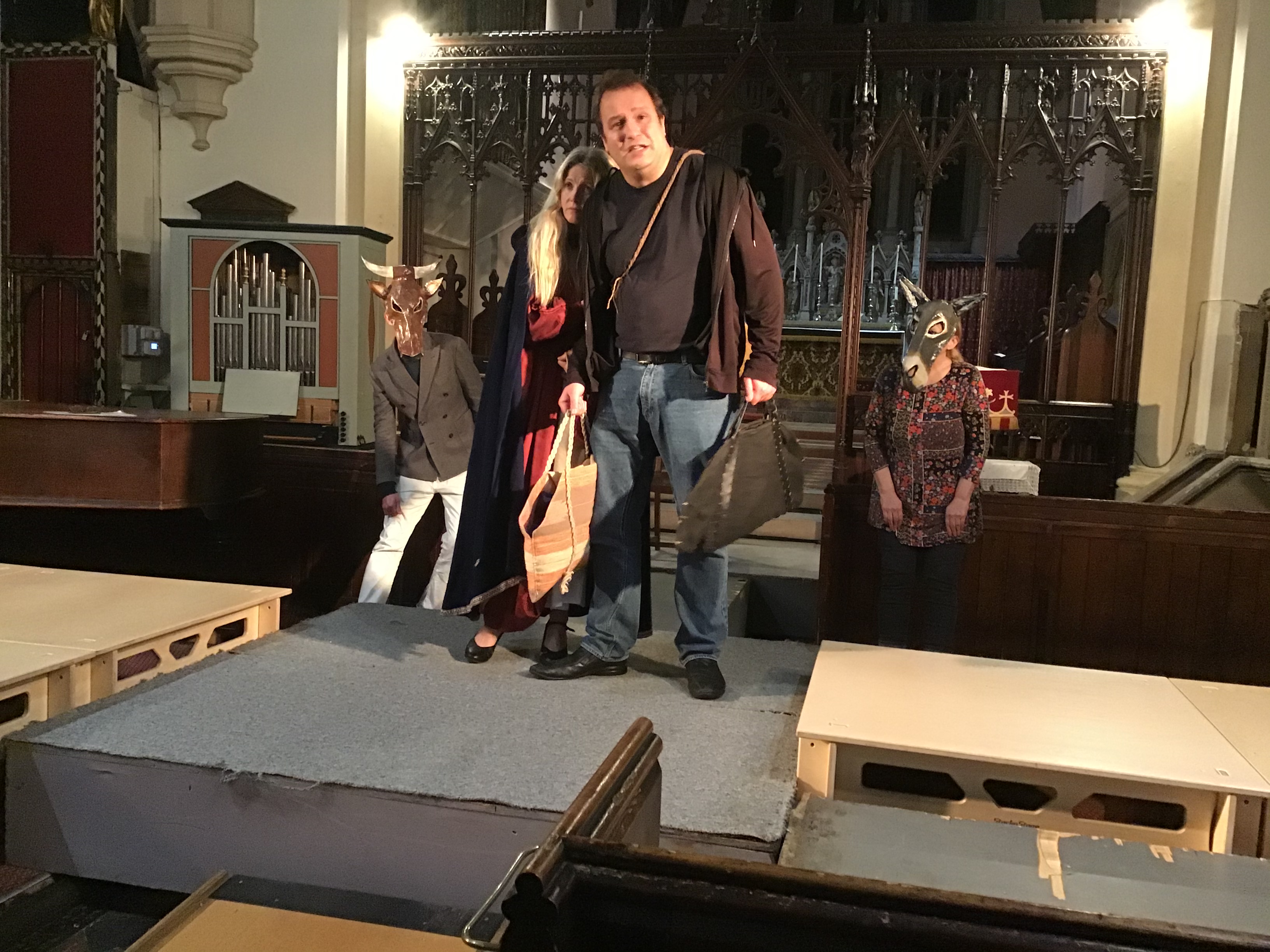

November 2008: The Chester Plays
|
Programme Notes

The Director on the text used in the 2008 production
Of the 24 plays that have survived from the medieval Chester pageants, which together portrayed the biblical narratives from Creation to Domesday in a contemporary English setting, we are performing five this year, selected from different parts of the cycle.
Any selection from the plays that form the cycle is necessarily to some extent arbitrary, giving only a flavour of the whole grand festival experience. This year, I have chosen some of the key episodes in mankind's return to grace with God following the fall into temptation.
We start with a Prologue (taken from the Barbers', the Tanners' and the Drapers' Plays) featuring the narrator figure Goobett, who introduces the Trinity of God the Father, Son and Holy Spirit, through whom we see – in summary form only – the deity's joy in the harmony of creation and then sorrow at the falls of both Lucifer and later mankind from the circle of heavenly grace, or "solace" (comfort/joy), represented by the angels.
The multi-scened Wrights' Play features the arrival of Christ, the Son of God, as a human child in a medieval world. The word of God comes to local folk: the pious girl Mary, her joyful aunt Elizabeth, and to midwives in the Bethlehem stable, one of whom (understandably, it may seem) dared to challenge the nature of the miraculous birth. It also comes to the noble Roman Emperor Octavian (Augustus) in the form of a vision of Christ presented to him by the prophetess Sibyl (envisaged in medieval tradition as a pious seer) after he has rejected the temptation to be acclaimed a god.
The famous Chester Painters' Guild Play features three shepherds who have worked together for a lifetime on the cold hillsides outside the city, and their young, threadbare apprentice Trowle and his dog Dotinowle. They gather together for "solace" to show off their rival sheep salve recipes, to share food, wrestle for sport and later to sing when the angelic news of the Christmas birth reaches them. Their happy meeting with the Christ child in Bethlehem changes their lives.
The Butchers' Play of the Temptation of Christ in the desert portrays Lucifer's malevolent corruption of the world and his attempts to make the adult Jesus obey his will. Jesus the suffering man struggles to discover his full identity and certainty about his mission in life. As he resists the triple temptation proposed by Lucifer (to give in to his need for food; to demonstrate his godly power by jumping from the temple's height, trusting to angels to bear him up in the sight of all; and finally to bow down to Lucifer and so be beholden to him for the gift of the world's treasures and souls) we see Jesus revealed in his nature as Christ the divine son.
The Cooks' Play of the Harrowing of Hell takes place after the crucifixion of Christ, when he is envisaged as journeying to the dark citadel where Lucifer and his demons hold all mankind who have died since Adam, and whose souls by God's original judgement could not proceed to heaven. By his acceptance of death, Christ the warrior is able to defeat Lucifer and release these souls to the hope of entering heaven at the Last Judgement. Some souls, however, such as the taverners who have adulterated their wares and threatened the health of their neighbours, remain condemned to the darkness of hell! This must reflect a particular fear of the spread of disease in medieval times.
Our final play – the Taylors' Play of the Ascension – incorporates Christ's Resurrection and his reappearance amongst his living faithful followers. Recognised as he breaks bread with them, Christ blesses them and sends them to spread his word of love and peace down the generations.
© Olive Stubbs 2008